7 Setting Tips to Use a Garden Trowel for Precise Seed Setting
The cool weight of a garden trowel in your palm carries more than steel and wood. It carries precision. When using a garden trowel for vegetable transplanting, the angle of entry, the depth of the cavity, and the compression ratio of backfilled soil determine whether a seedling establishes robust lateral roots or languishes in transplant shock. Professional growers measure success in millimeters of fibrous root spread, not in optimistic guesses. The trowel becomes an extension of soil literacy, translating knowledge of soil structure, water retention, and microbial activity into mechanical action.
Materials
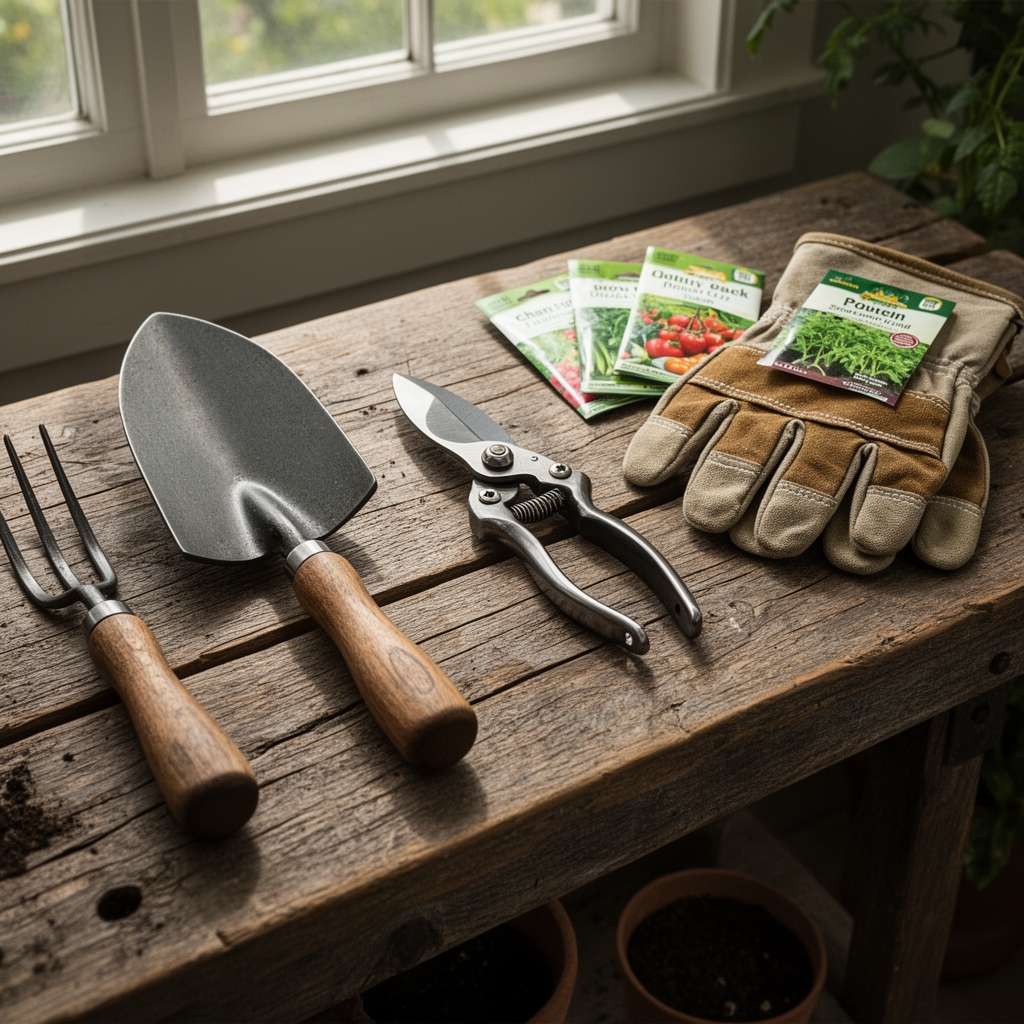
Select a trowel with a blade length of 6 to 8 inches, constructed from tempered steel or stainless alloy. The handle should allow 20 to 30 degrees of wrist flexion without strain. Blade width at the base must match the root ball diameter of your transplants, typically 2 to 3 inches for vegetable seedlings.
Soil amendments must match crop requirements. For brassicas and nightshades, incorporate compost with a balanced 4-4-4 NPK ratio at 2 pounds per square foot. Legumes require minimal nitrogen but benefit from rock phosphate (0-3-0) at 1 pound per 10 square feet to support nodulation. Root crops demand friable soil. Mix in perlite or coarse sand at a 3:1 ratio with native soil to reduce compaction and lower bulk density below 1.3 grams per cubic centimeter.
Adjust soil pH between 6.0 and 6.8 for most vegetables. Apply dolomitic lime at 5 pounds per 100 square feet to raise pH by one full point. For acidification, elemental sulfur at 1 pound per 100 square feet lowers pH by 0.5 points over 60 days. Incorporate mycorrhizal inoculant at the manufacturer's specified rate, typically 1 teaspoon per transplant hole, to colonize roots and extend the effective rhizosphere by 10 to 40 times.
Timing
Transplant timing hinges on both soil temperature and hardiness zone. In zones 3 through 5, wait until soil reaches 50°F at 4 inches depth, typically 2 to 3 weeks after the last spring frost. Zones 6 through 8 permit transplanting 1 week after the last frost when soil hits 55°F. Zones 9 and 10 allow year-round transplanting but avoid periods when soil exceeds 85°F, which inhibits root hair formation.
Cool-season crops such as lettuce, kale, and broccoli tolerate soil temperatures between 40°F and 70°F. Transplant these 3 to 4 weeks before the last frost date. Warm-season crops including tomatoes, peppers, and cucurbits require soil above 60°F. Transplant after all frost danger has passed and nighttime air temperatures remain above 50°F for at least 5 consecutive nights.
Phases
Sowing
Direct sowing with a trowel demands depth precision. Carve a furrow at twice the seed diameter. For lettuce, this means 0.125 inches. For beans, 1 inch. Press the trowel blade vertically into prepared soil to create uniform depth. Drop seeds at intervals matching mature plant spacing, then backfill with fine soil. Tamp lightly to ensure seed-to-soil contact without compressing voids required for oxygen diffusion.
Pro-Tip: Score the trowel blade with a permanent marker at 0.5-inch intervals to eliminate guesswork.
Transplanting
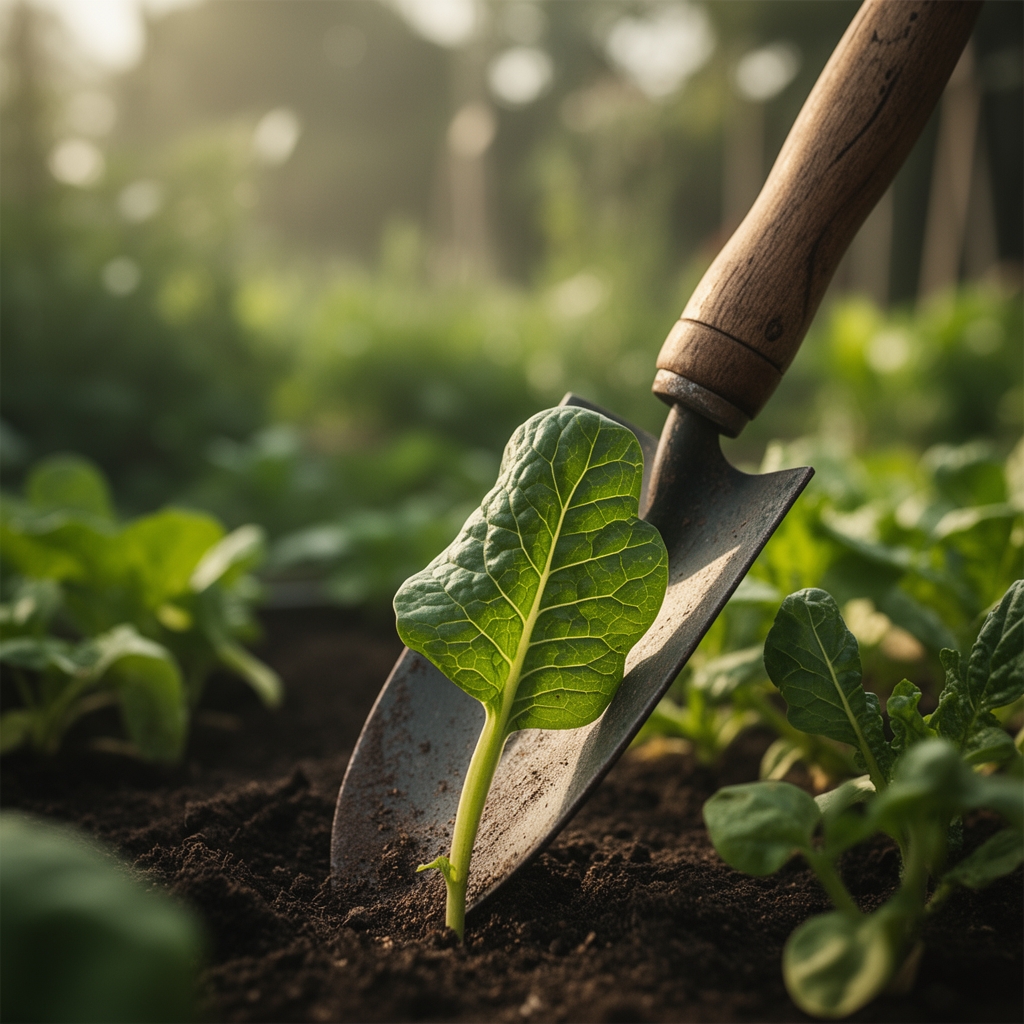
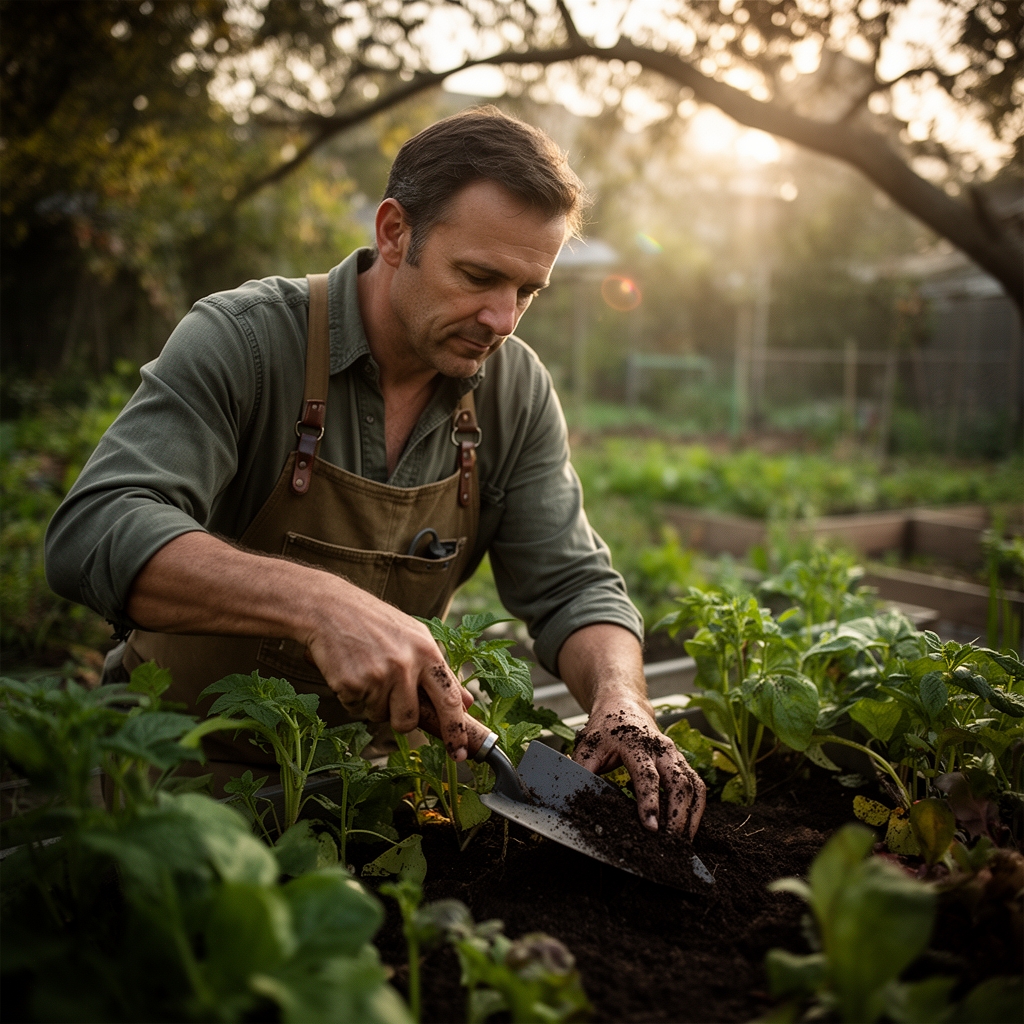
Excavate a planting hole 1.5 times the root ball diameter and equal in depth to the container height. For most seedlings, this creates a cavity 3 to 4 inches wide and 3 inches deep. Insert the trowel at a 75-degree angle to avoid severing existing root systems nearby. Rotate the trowel handle to widen the hole without collapsing walls.
Remove the seedling from its container and inspect for circling roots. Tease apart compacted roots gently or score the root ball vertically with a clean blade at four equidistant points, each cut 0.25 inches deep. This mechanical disruption redirects auxin distribution and stimulates lateral root emergence.
Position the seedling so the soil line matches its original container depth. Tomatoes constitute an exception; bury stems up to the first true leaves to promote adventitious rooting. Backfill with native soil mixed 1:1 with compost. Firm soil with your palms to eliminate air pockets but leave surface texture loose for gas exchange.
Pro-Tip: Inoculate the planting hole with Trichoderma harzianum at 1 gram per hole to suppress damping-off pathogens.
Establishing
Water immediately after transplanting with 0.5 gallons per plant, delivered at the soil surface rather than overhead to minimize foliar disease vectors. Apply a 2-inch layer of shredded hardwood mulch in a 6-inch radius around each transplant, keeping mulch 1 inch away from stems to prevent collar rot.
Monitor for wilt symptoms daily during the first week. Leaves should regain turgor within 48 hours. If not, increase watering frequency to twice daily for 3 days. After 10 days, roots extend beyond the original root ball. Reduce watering to 1 inch per week, delivered in a single deep irrigation to encourage downward root growth.
Pro-Tip: Prune terminal growth at a 45-degree angle 7 days post-transplant to redirect energy into root development rather than vegetative expansion.
Troubleshooting
Symptom: Yellowing lower leaves with green veins appearing 5 to 7 days post-transplant.
Solution: Iron chlorosis induced by high soil pH. Apply chelated iron (Fe-EDTA) as a foliar spray at 0.5 ounces per gallon. Drench soil with sulfur solution to lower pH over the long term.
Symptom: Wilting during midday heat despite adequate soil moisture.
Solution: Root-to-shoot ratio imbalance. Transplant shock has limited water uptake capacity. Erect 50% shade cloth for 5 to 7 days to reduce transpiration demand by approximately 40%.
Symptom: Stems elongate rapidly with pale, sparse foliage.
Solution: Etiolation from excessive nitrogen relative to phosphorus. Reduce nitrogen inputs and apply bone meal (3-15-0) at 2 tablespoons per plant to rebalance NPK ratio.
Symptom: Circular lesions on leaves with concentric rings.
Solution: Early blight (Alternaria solani). Remove affected foliage. Apply copper fungicide at 1.5 tablespoons per gallon every 7 days for 3 applications.
Symptom: Stunted growth with purple-tinged leaves.
Solution: Phosphorus deficiency exacerbated by cold soil below 55°F, which inhibits phosphorus uptake. Warm soil with black plastic mulch and apply liquid phosphorus (0-20-0) at 1 tablespoon per gallon as a soil drench.
Maintenance
Irrigate established transplants with 1 inch of water per week, measured with a rain gauge. Deliver water in one session rather than multiple light applications to promote roots that reach 12 to 18 inches deep. In sandy soils with low cation exchange capacity, increase frequency to twice weekly at 0.5 inches per session.
Sidedress with granular fertilizer 3 weeks after transplanting. For fruiting crops, apply 5-10-10 at 2 tablespoons per plant in a 4-inch-radius circle, 3 inches from the stem. Scratch into the soil surface with the trowel edge to a depth of 1 inch, then water thoroughly.
Hoe weeds weekly when they reach 0.5 inches tall, using the trowel to extract taprooted species like dandelion. Cut below the crown at 2 inches depth to prevent regrowth.
FAQ
What trowel blade shape works best for transplanting?
A blade with a pointed tip penetrates compacted soil more effectively than rounded designs. The cutting edge should taper to less than 2 mm thickness.
Can I transplant during active rainfall?
No. Excess moisture collapses soil pores and creates anaerobic conditions that suffocate roots. Wait until soil crumbles when squeezed but retains faint moisture.
How deep should I set tomato transplants?
Bury stems up to the first set of true leaves, typically 3 to 5 inches deeper than the container soil line, to generate adventitious roots.
What spacing prevents root competition?
Maintain 18 to 24 inches between transplants for determinate crops, 30 to 36 inches for indeterminate varieties. Root zones extend 1.5 times the canopy diameter.
Should I fertilize immediately at transplanting?
No. High soluble salt concentrations damage emerging root hairs. Wait 14 to 21 days until roots colonize surrounding soil, then begin feeding.