6 Best Professional-Grade Tool Kits for Vegetable Garden Care
The weight of a forged steel trowel in your hand, the satisfying bite of properly tempered carbon edges through root-bound soil, and the ergonomic grip that prevents tendon strain after three hours of transplanting tomato seedlings all separate hobby gardening from professional vegetable cultivation. The best vegetable garden tool kits deliver precision instruments that treat soil structure with respect, preserve beneficial mycorrhizal networks, and withstand the mechanical stress of daily use across growing seasons. These kits serve as force multipliers for serious growers managing plots from 500 square feet to commercial quarter-acre installations.
Materials
Professional-grade vegetable garden tool kits require materials matched to soil chemistry and physical demands. Carbon steel forged tools with Rockwell hardness ratings between 52-58 HRC maintain sharp edges through clay soils with cation exchange capacities exceeding 25 meq/100g. Stainless steel options (304 or 316 grade) resist corrosion in coastal environments or beds amended with sulfur to lower pH from 7.2 to 6.5 for brassica production.
Handle materials determine longevity under repetitive stress. Ash wood handles with grain running parallel to the tool axis absorb shock better than synthetic alternatives while adding only 3-4 ounces. Fiberglass-reinforced polymer handles survive freeze-thaw cycles that split wooden alternatives but transmit more vibration to wrist joints during soil breaking.
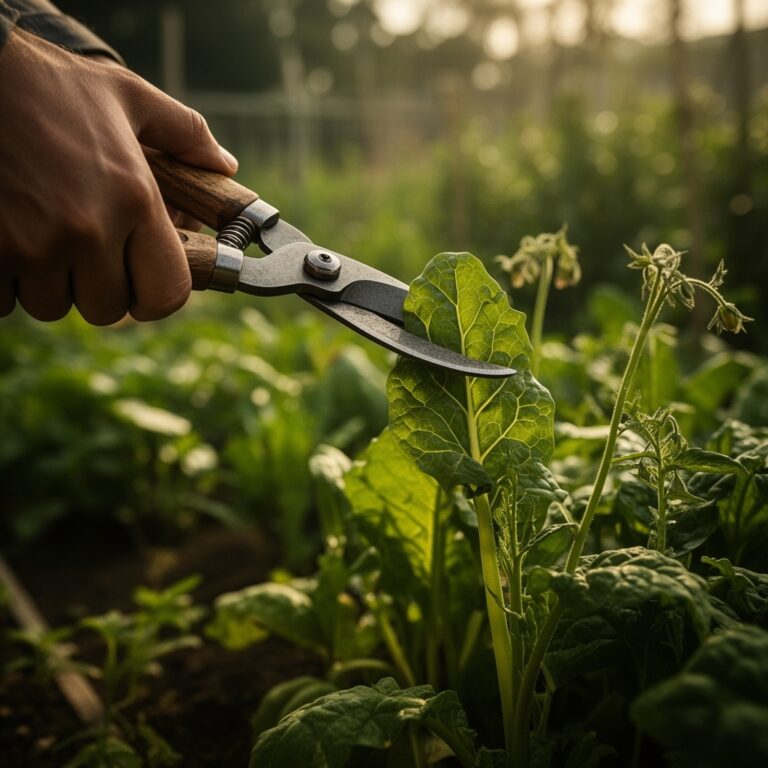
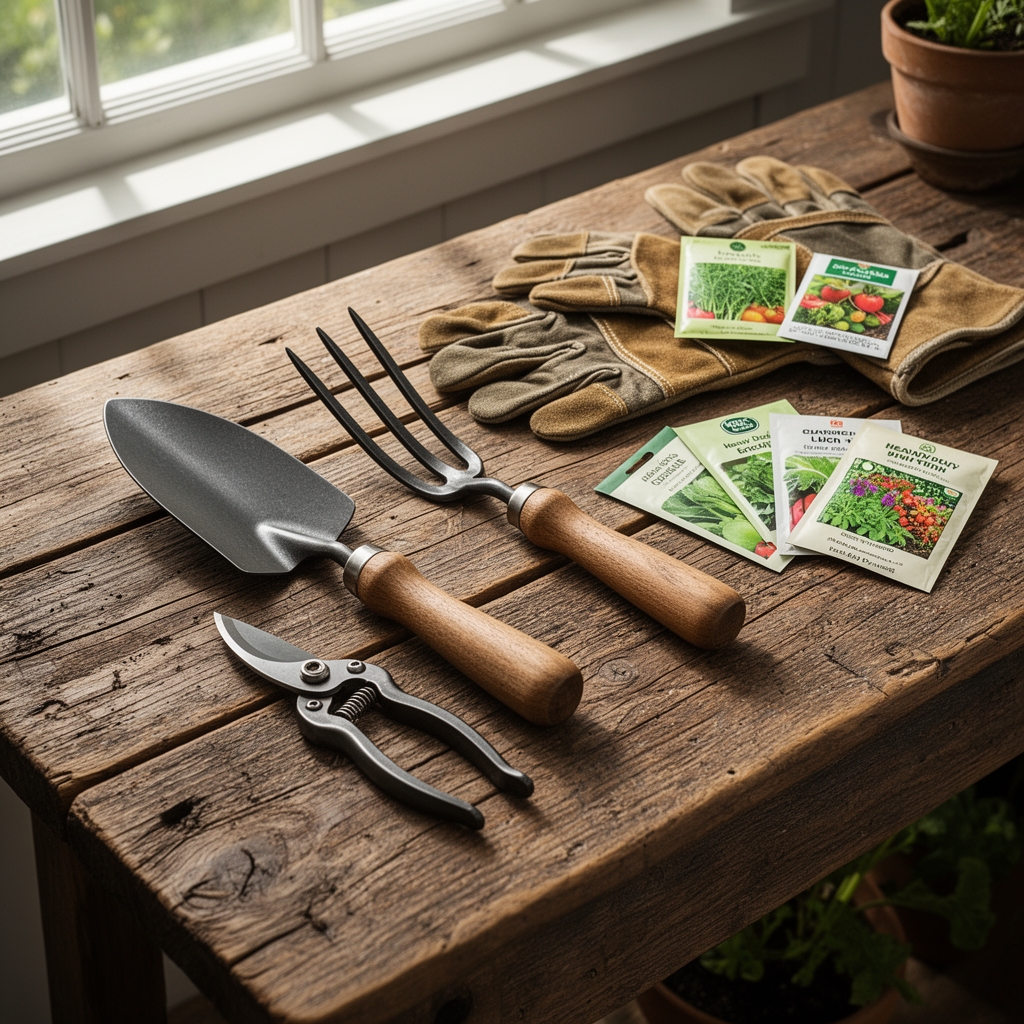
Six essential tool categories form complete professional kits. Digging spades with 7-inch blades and footrests cut cleanly through established root systems without damaging adjacent plants. Garden forks with four 12-inch tines penetrate compacted layers at 8-10 inch depths to improve aeration without inverting horizons. Hand trowels with 6-inch narrow blades maneuver in 4-inch spacing between intensive plantings. Hori-hori knives with 7-inch serrated/smooth combination edges transplant bare-root stock and sever taproots. Stirrup hoes with 5-inch oscillating blades sever annual weeds at soil line while preserving surface structure. Bypass pruners with 0.75-inch cutting capacity maintain auxin distribution through clean cuts on lateral branches.
Soil amendment compatibility matters for metal longevity. Tools used in beds receiving 4-4-4 organic meal blends or composted manure at 2 cubic yards per 100 square feet require daily cleaning to prevent organic acid etching. Beds amended with rock phosphate or greensand show less tool corrosion due to neutral to alkaline pH drift.
Timing
Hardiness zone calendars dictate tool kit deployment schedules. Zone 5 gardeners begin soil preparation 14 days after final frost date averaging April 25-May 10. Zone 7 operations start March 15-30. Zone 9 growers work year-round with peak activity September through April.
Spring preparation requires spading forks and digging spades 21 days before transplanting to incorporate cover crops. Green manures like winter rye at 3 pounds per 1000 square feet need chopping and 6-inch incorporation. Summer cultivation demands stirrup hoes weekly from June through August when soil temperatures at 2-inch depth exceed 65°F and weed germination accelerates. Fall cleanup begins 7-10 days after first frost when nighttime temperatures drop below 32°F for three consecutive nights.
Phases
Sowing
Direct seeding operations require hori-hori knives to cut furrows at precise 0.5-inch depths for lettuce or 1.5-inch depths for beans. Blade angle at 45 degrees to soil surface creates consistent depth profiles. Tamp soil with blade flat against surface using 2-3 pounds of pressure.
Pro-Tip: Inoculate legume seeds with Rhizobium bacteria at 1 teaspoon per 1 pound of seed immediately before sowing. Mix in paper bags to coat evenly. Plant within 2 hours to preserve bacterial viability.
Transplanting
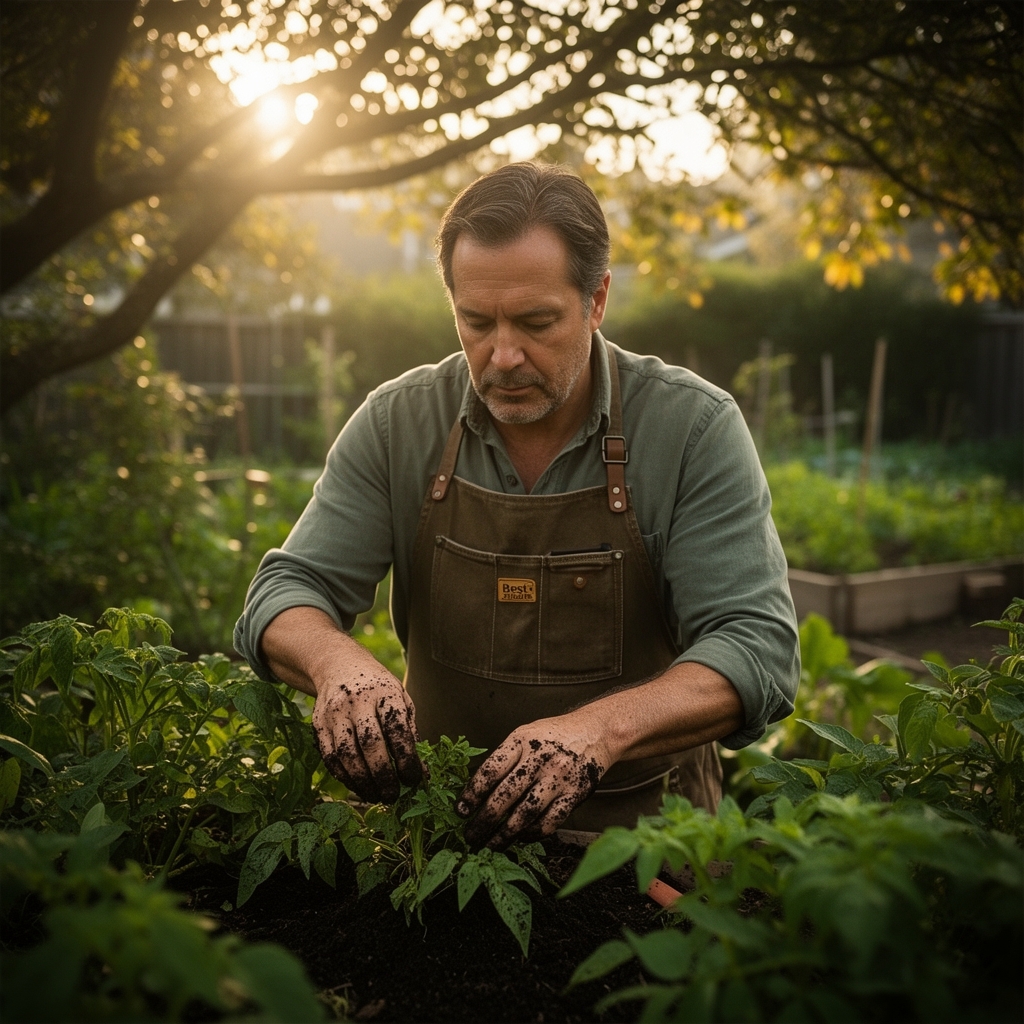
Garden forks loosen subsoil 8 inches below transplant holes without creating air pockets. Insert tines vertically, rock handle 15 degrees forward and back three times, withdraw cleanly. Trowels excavate holes 1.5 times root ball diameter. Position transplants so crown sits 0.25 inches above finished grade to prevent collar rot.
Pro-Tip: Prune tomato seedling roots at 30-degree angles 24 hours before transplanting. Remove lowest 2 inches of root mass to stimulate lateral root flush within 72 hours of field placement.
Establishing
Stirrup hoes cultivate 0.5-1 inch deep in 6-inch radius around transplants every 7 days for first month. Sharp blade entry severs weeds at hypocotyl without disturbing crop roots in top 3 inches. Bypass pruners remove lower leaves on fruiting crops when foliage touches soil. Cut 0.25 inches above main stem at 60-degree angle sloping away from stem to shed moisture.
Pro-Tip: Apply mycorrhizal fungi granules at 1 tablespoon per transplant hole. Products containing Glomus intraradices at 120 propagules per gram colonize 40-60% of fine root surface area within 21 days in soils with phosphorus below 35 ppm.
Troubleshooting
Symptom: Trowel blade bends during clay penetration.
Solution: Preheat blade to 150°F using propane torch for 45 seconds. Bend back to original angle over steel pipe. Reharden is unnecessary for minor deformation under 5 degrees.
Symptom: Wooden handles split longitudinally after winter storage.
Solution: Sand split area to bare wood. Apply boiled linseed oil at 2 coats 24 hours apart. Wrap handle spiral with waxed cord at 0.5-inch spacing over 6-inch length spanning split.
Symptom: Pruner blades crush stems instead of cutting cleanly.
Solution: Sharpen bypass blade at 20-degree angle using 400-grit diamond stone. Maintain 0.5mm gap between bypass and anvil blade. Apply 1 drop of light machine oil to pivot point weekly.
Symptom: Fork tines lose temper and bend permanently.
Solution: Replace tool. Re-tempering requires 1500°F heat treatment beyond field capability. Bent tines indicate substandard manufacturing or misuse as pry bars.
Symptom: Hoe blade dulls after 30 minutes of use.
Solution: Sharpen with 10-inch mill file at original bevel angle every 20 minutes of active cultivation. Carbon steel requires 15 strokes per side. Stainless needs 25 strokes.
Maintenance
Clean all tools within 1 hour of use. Spray with garden hose at 40 psi to remove soil particles. Scrub metal surfaces with brass brush using 10 strokes per square inch. Dry completely with cotton rags.
Oil carbon steel weekly during growing season. Apply light machine oil or camellia oil at 5 drops per tool. Spread with lint-free cloth until thin film covers all metal. Excess oil attracts soil particles.
Sharpen edges every 4 hours of soil contact time. Use 10-inch bastard mill file for spades and hoes. Maintain factory bevel angles between 20-35 degrees depending on tool type. File in single direction only, lifting on return stroke.
Store tools hanging vertically in dry location with relative humidity below 60%. Wall-mounted racks prevent handle warping. Apply heavy coat of paste wax to metal surfaces before winter storage in unheated spaces.
FAQ
What steel grade performs best for professional vegetable garden tool kits?
Carbon steel containing 0.6-0.8% carbon with manganese additions provides optimal balance of edge retention and resharpening ease. Avoid high-carbon blades above 1.0% that chip in rocky soils.
How often should I replace professional garden tool handles?
Ash and hickory handles last 8-12 seasons with proper maintenance. Replace when compression damage exceeds 15% of handle circumference at ferrule junction or when visible cracks extend beyond 2 inches.
Do stainless steel tools justify 40% higher costs?
In coastal zones or beds amended to pH below 5.5, stainless steel eliminates rust formation and extends service life by 5-7 years. Inland gardens with neutral pH gain minimal benefit beyond aesthetic preference.
What tool kit size suits 1000 square foot intensive vegetable gardens?
Six core tools handle 95% of tasks: One digging spade, one garden fork, one hand trowel, one hori-hori knife, one stirrup hoe, one bypass pruner. Total investment ranges from 180 to 340 dollars for professional-grade options.
Should I sterilize tools between disease-prone crops?
Yes. Wipe blades with 10% bleach solution (1 part bleach to 9 parts water) when moving between solanaceous crops or working in plots with confirmed bacterial wilt. Contact time of 60 seconds kills most pathogens.